It's been two months since my last post. I stare at the screen and the curser flashes back at me - challenging, accusing - "where have you been? How do you account for yourself?"
Two months... So much and so little. An interval, an aeon, a blink of an eye.
Last night, we ate cherries from our allotment; the first crop, the ones we'd managed to protect from the birds. I chanted as I lined up the stones at the side of my plate "Tinker, Tailor, Soldier, Sailor, Rich Man, Poor Man, Beggar Man, Thief", the rhyme rolled off my tongue as though I'd said it only yesterday. My delight in ending at Rich Man just as strong as the last time that happened, more than forty years ago, in the kitchen at Croxted Road.
This morning, as I dressed for work, I remembered the green pleated skirt I'd bought with the first wages from my Saturday job at Woolworths. I pictured the small clothes shop in West Norwood High Street, imagined myself once again sliding the hangers along the rail, picking out the skirt and taking it into the tiny changing room. I saw my younger self trying it on, twirling and circling in front of the mirror, watching the fabric spinning out wide.
A week ago, a letter arrived. Addressed to The Householder, it came from an insurance company trying to find the family of a man who'd once lived here. I wonder what that would be like, to live and die, distanced from family, leaving no mark.
Two months... Birthdays, a wedding, a weekend in Reading. Formula 1, football, a Wimbledon champ. Sunshine in Greece, fields filled with lavender, working and reading and digging and weeding.
On Thursday it will be five years since the day Philip and I stood side by side in a Dartford registry office, promising to love til death do us part.
Time flies so quickly, and yet not at all.
Showing posts with label Croxted Road. Show all posts
Showing posts with label Croxted Road. Show all posts
Tuesday, 30 July 2013

Sunday, 30 December 2012
Seeing the light
In the sudden switch from sleep to wakefulness, I can't work out what's woken me or why. It's as though someone has come into the room and thoughtlessly turned on the light. Philip is still there beside me, and there's no sign of recent movement, but across his face and pillow there is indeed a light; a clear bright beam, falling on him like a spotlight from the sky.
A strange and unexpected alignment of cloudless sky, leaf-bared trees and the lunar cycle, has brought the full moon through our open curtains and into the bedroom. Drawn to it, I stand at the window looking out, thinking of all the clichés that have ever been penned about moonlight, my sleep-dulled brain unable to come up with any new words to describe the silver glow lighting up our room, shining magically outside.
It's bright enough to see along the row of gardens that back the houses of our street; to pick out the sheds and greenhouses, washing lines and compost bins. It's the same garden furniture I see every time I look out, but tonight it's lost some of its ugly practicality, swept by a glistening shimmer. For a moment I wonder if this is what it would be like if giant slugs had crept across the land while we slept.
I stand and gaze, and as I do, the view in front of me is replaced by a series of other gardens, looked at from other windows. I'm back leaning on the tiled window-sill of my childhood bedroom in Croxted Road, peering through the net curtains and the steel-framed windows that were covered in condensation every morning of the year. I remember the story that I used to tell my friends to explain the small scar on my forehead; the story where I fell out of the window and somehow miraculously survived, not the real one where I climbed up to watch my Dad in the garden, slipped and caught my head on the corner of a cupboard. Or at least that's the story I think is real.
Then I'm looking out over the flat pitched roof of the dining room extension in Manor Way, past the spot in the flower bed where Megan would sit chatting to Ruth next door, as they swapped mud pies through holes in the fence; past the hedges and the shrubs that I clipped and pruned year after year, down to the bottom of the garden, where the green swing sits, just as it should for every child.
I'm whisked forward in time to the bedroom window in Crown Road, to see Martin, our overweight cat, teetering along the top of the garden fence, making his way to our neighbours' bird table to sit hunched up like a fat furry turkey on a plate. Beyond the fence is the old orchard, where the overgrown grass and ancient trees strain to face another year, hoping once again to defy the latest in a long list of planning applications to fill their space with a row of houses.
I stand remembering, until I realise that the light is getting brighter, no longer from the moon but the start of a new day. I think about the hours I've spent staring out of bedroom windows at a series of gardens and neighbourhoods and I realise I've almost always slept at the back of the house. Hardly ever has my view been of street lights and front doors, of passing cars, or concrete paths. My first glimpse and last look at the outside world each day has been the world of grass and trees, of home and family.
I take one last look at the sky before going to make my first cup of tea of the day. Sometimes we try so hard to reach the moon, when all we really need to do is stop and see.
A strange and unexpected alignment of cloudless sky, leaf-bared trees and the lunar cycle, has brought the full moon through our open curtains and into the bedroom. Drawn to it, I stand at the window looking out, thinking of all the clichés that have ever been penned about moonlight, my sleep-dulled brain unable to come up with any new words to describe the silver glow lighting up our room, shining magically outside.
It's bright enough to see along the row of gardens that back the houses of our street; to pick out the sheds and greenhouses, washing lines and compost bins. It's the same garden furniture I see every time I look out, but tonight it's lost some of its ugly practicality, swept by a glistening shimmer. For a moment I wonder if this is what it would be like if giant slugs had crept across the land while we slept.
I stand and gaze, and as I do, the view in front of me is replaced by a series of other gardens, looked at from other windows. I'm back leaning on the tiled window-sill of my childhood bedroom in Croxted Road, peering through the net curtains and the steel-framed windows that were covered in condensation every morning of the year. I remember the story that I used to tell my friends to explain the small scar on my forehead; the story where I fell out of the window and somehow miraculously survived, not the real one where I climbed up to watch my Dad in the garden, slipped and caught my head on the corner of a cupboard. Or at least that's the story I think is real.
Then I'm looking out over the flat pitched roof of the dining room extension in Manor Way, past the spot in the flower bed where Megan would sit chatting to Ruth next door, as they swapped mud pies through holes in the fence; past the hedges and the shrubs that I clipped and pruned year after year, down to the bottom of the garden, where the green swing sits, just as it should for every child.
I'm whisked forward in time to the bedroom window in Crown Road, to see Martin, our overweight cat, teetering along the top of the garden fence, making his way to our neighbours' bird table to sit hunched up like a fat furry turkey on a plate. Beyond the fence is the old orchard, where the overgrown grass and ancient trees strain to face another year, hoping once again to defy the latest in a long list of planning applications to fill their space with a row of houses.
I stand remembering, until I realise that the light is getting brighter, no longer from the moon but the start of a new day. I think about the hours I've spent staring out of bedroom windows at a series of gardens and neighbourhoods and I realise I've almost always slept at the back of the house. Hardly ever has my view been of street lights and front doors, of passing cars, or concrete paths. My first glimpse and last look at the outside world each day has been the world of grass and trees, of home and family.
I take one last look at the sky before going to make my first cup of tea of the day. Sometimes we try so hard to reach the moon, when all we really need to do is stop and see.
Sunday, 15 April 2012
The Cherry Orchard
Oh, my childhood, my innocent childhood! This is the nursery where I slept and I used to look out at the orchard from here. When I woke up every morning happiness awoke with me...
(Chekhov, 1903)
There were no orchards in Croxted Road, but I can still picture the garden as it looked from my bedroom window more than thirty years ago.
Most of it was just grass, not grand enough to be called a lawn, spotted with daisies and dandelions, it had a round dip halfway down that we sometimes called a fairy ring. There were borders for flowers, with roses for making squashed-petal-perfume, snap-dragons that would open their mouths as we squeezed at the side, and livingstone daisies that closed tight every night as the sun went down and opened again like magic in the morning. There was a bumpy stone path that led alongside the washing line to the bottom of the garden, where the compost heap and the gooseberry bushes sat either side of the huge green swing.
If I close my eyes and concentrate, I can still see my big sister peering round the flap of her wigwam; I can hear my little sister riding her pretend horse, making clip-clopping noises as she gallops around and around; in my mind's eye, our cat Oliver winds in and out of my Mum's legs as she pegs washing on the line and my Dad sits on the swing smoking a cigarette.
I loved that garden; a place for laughing and arguing, for fighting and playing. Never mind that it was a small back garden in south London, in my imagination it was part The Secret Garden, part Little House on the Prairie, and it came to represent for me everything that a garden should be. For a long time after I left Croxted Road, I wanted to create another garden just the same. A place for my own children to remember, somewhere they could grow up in, then return to as adults, in time bringing their own children with them.
But of course, it didn't turn out like that.
Sometimes the world changes around us and we aren't able, or simply just fail, to take control and change the course of events. Chekhov knew that. The Cherry Orchard ends with Mrs Ranevsky losing her childhood home, with the curtain falling to the sound of an axe cutting down the orchard. A hundred years later, I understood it too as my dreams of a long-time family home and garden were replaced by the reality of a series of rented houses and other people's gardens.
I like to think though, that there's more to both our stories. Mrs Ranevsky set out for Paris, we came to Otford.
Last year we bought our house and with it, we took ownership of a long, long, garden. It has room for a swing, for flower beds and a path, there are long stretches of grass, space for games and picnics. We're making plans for places to sit, for climbing roses and a fragrant lilac. It will take a while, but I think we'll gradually turn it into a garden to remember.
And this week we planted a cherry tree.

(Chekhov, 1903)
There were no orchards in Croxted Road, but I can still picture the garden as it looked from my bedroom window more than thirty years ago.
Most of it was just grass, not grand enough to be called a lawn, spotted with daisies and dandelions, it had a round dip halfway down that we sometimes called a fairy ring. There were borders for flowers, with roses for making squashed-petal-perfume, snap-dragons that would open their mouths as we squeezed at the side, and livingstone daisies that closed tight every night as the sun went down and opened again like magic in the morning. There was a bumpy stone path that led alongside the washing line to the bottom of the garden, where the compost heap and the gooseberry bushes sat either side of the huge green swing.
If I close my eyes and concentrate, I can still see my big sister peering round the flap of her wigwam; I can hear my little sister riding her pretend horse, making clip-clopping noises as she gallops around and around; in my mind's eye, our cat Oliver winds in and out of my Mum's legs as she pegs washing on the line and my Dad sits on the swing smoking a cigarette.
I loved that garden; a place for laughing and arguing, for fighting and playing. Never mind that it was a small back garden in south London, in my imagination it was part The Secret Garden, part Little House on the Prairie, and it came to represent for me everything that a garden should be. For a long time after I left Croxted Road, I wanted to create another garden just the same. A place for my own children to remember, somewhere they could grow up in, then return to as adults, in time bringing their own children with them.
But of course, it didn't turn out like that.
Sometimes the world changes around us and we aren't able, or simply just fail, to take control and change the course of events. Chekhov knew that. The Cherry Orchard ends with Mrs Ranevsky losing her childhood home, with the curtain falling to the sound of an axe cutting down the orchard. A hundred years later, I understood it too as my dreams of a long-time family home and garden were replaced by the reality of a series of rented houses and other people's gardens.
I like to think though, that there's more to both our stories. Mrs Ranevsky set out for Paris, we came to Otford.
Last year we bought our house and with it, we took ownership of a long, long, garden. It has room for a swing, for flower beds and a path, there are long stretches of grass, space for games and picnics. We're making plans for places to sit, for climbing roses and a fragrant lilac. It will take a while, but I think we'll gradually turn it into a garden to remember.
And this week we planted a cherry tree.
Tuesday, 23 August 2011
Life lines
I'd sit there for hours at the dining room table, the Spirograph set in front of me with everything in its rightful place; the cogs and wheels laid out in their plastic packaging, four pens with different coloured inks, a corrugated card backing-sheet and the small pins with round yellow tops that would hold the wheels in place. The instruction leaflet showed me the countless ways I could produce intricate patterns, just by chasing a cog around a wheel; and I believed it. I was captured by the promise of the swirling patterns, by the idea that I could recreate those pictures from lines.

And sometimes I did. But more often than not, my hand would slip as I changed direction, or the paper would move where I hadn't pinned it down tightly, and my intricate pattern would be scarred by a jagged line of ink cutting through. I'd always been proud of my colouring-in, my skill at keeping the bright pencil shades inside the bold black lines, but this was different. In the Spirograph patterns, the lines haunted and taunted me, marking out my successes and failures for everyone to see.
As I sit here tonight I think of all the other lines. The thickening waistlines and thinning hairlines; the multiplying creases round our eyes, the pillow line that carves my face like a ventriloquist's dummy. I reflect on the times at work when I've tried to cross the line, or encouraged others to toe the line. I smile at the warm feeling of success and relief that comes on opening night, when after months of rehearsals, all the lines come out with the right words in the right order. I remember old relationships where I failed to draw the line or was too stupid to read between the lines. I recognise the thin line between right and wrong, between love and hate.
Then I look outside and see your vests flapping against my t-shirts on the washing line, and I remember the lines I wrote you in that e-mail, back before our beginning. I would never have guessed then of the marriage lines we'd share so many years later.
I think of the lines that mark the beginning and end of life, the umbilical cord, the blinking line on a heart monitor. I'm glad you are my life line.

And sometimes I did. But more often than not, my hand would slip as I changed direction, or the paper would move where I hadn't pinned it down tightly, and my intricate pattern would be scarred by a jagged line of ink cutting through. I'd always been proud of my colouring-in, my skill at keeping the bright pencil shades inside the bold black lines, but this was different. In the Spirograph patterns, the lines haunted and taunted me, marking out my successes and failures for everyone to see.
As I sit here tonight I think of all the other lines. The thickening waistlines and thinning hairlines; the multiplying creases round our eyes, the pillow line that carves my face like a ventriloquist's dummy. I reflect on the times at work when I've tried to cross the line, or encouraged others to toe the line. I smile at the warm feeling of success and relief that comes on opening night, when after months of rehearsals, all the lines come out with the right words in the right order. I remember old relationships where I failed to draw the line or was too stupid to read between the lines. I recognise the thin line between right and wrong, between love and hate.
Then I look outside and see your vests flapping against my t-shirts on the washing line, and I remember the lines I wrote you in that e-mail, back before our beginning. I would never have guessed then of the marriage lines we'd share so many years later.
I think of the lines that mark the beginning and end of life, the umbilical cord, the blinking line on a heart monitor. I'm glad you are my life line.
Tuesday, 26 July 2011
Staying over
It's sometimes blindingly obvious - that link between childhood fascinations and grown-up obsessions. It takes no effort at all for me to trace the journey from standing with my Dad, on the terraces at Crystal Palace football club, to standing with Philip behind the goal at Bromley FC. It's almost as easy to see how my my love for Formula 1 racing started when we walked beside the wide tracks of the one-time racing circuit in Crystal Palace Park, or listened to the roar of the engines from the back door step at home.
It isn't always quite as simple to understand the impact of the things we never did, those things that went unnoticed and unremarked at the time.
Looking back I think we must have been fairly self-contained as a family; the characters in my memory bank are always my parents, grandparents and sisters. Apart from an occasional aunt and uncle, I don't remember any other visitors. Perhaps there were friends of my parents who made quiet calls after I'd gone to bed, but if they did, there were never any traces of their presence the next day. And, apart from the time when my Nan was really sick, I never, ever, remember anyone coming to stay.
No childish sleepover ending in a top-to-toe bed-share; no late night dinner party leading to a blanket- draped figure on the sofa. No strange coats thrown over the banisters at the bottom of the stairs, no odd toothbrushes in the bathroom, no politely embarrassed conversations over breakfast.
Our house wasn't big; five of us and only three bedrooms, but it never felt too small to me, certainly not like Maria from school, who lived with her six brothers and sisters in one of those tiny houses overlooking the cemetery. We didn’t have central heating, but hardly anyone I knew did then –we were used to the winter frost on the inside of the bedroom windows, to cowering under the wall heater in the bathroom, to sitting in the kitchen with all the gas rings blazing to keep us warm while we ate. But the house was always clean; properly clean. not just a tidy-away-the-newspapers-and flick-the-hoover-round clean.
I never asked then, and I wouldn’t dream of asking now, so I'll never really know why nobody came to stay. But in the midst of all that didn't happen, I somehow missed out on a whole heap of life lessons, on the etiquette of staying over.
I never quite grasped how much cleaning in advance is a good thing or when to stop; I could never see the boundaries between thoughtful hospitality and force-feeding. I never learnt when it was ok to admit to tiredness, to suggest it was time for bed; and I never understood the proper arrangements for getting up in the morning or agreeing the order for the bathroom. I couldn't work out if it was better to take in a cup of tea and risk waking people too early, or to wait until they decided to surface and risk leaving them feeling ignored. I never reached that state of relaxed happiness where you know your guests are having a grand time and you can stop trying to fend off their boredom and disappointment.
For years I shied away from inviting people to stay; in my head I invented all sorts of reasons why it was a bad idea or simply inconvenient.
This weekend I learned something I never found out as a child; if you invite good people because you enjoy their company, you end up enjoying their company. Your new house begins to feel a bit more like home and you start to see the place where you live with different eyes. You might even begin to feel a strange sense of pride that your village has the only listed duck pond in the country and the largest scale model of the solar system in the world. It might not even matter if you don’t quite get the etiquette right, you could still have a simply lovely time.
And this weekend we did.
And this weekend we did.
Sunday, 26 June 2011
Like Robin Hood and Maid Marian
There's a sunken pathway. Without any paving stones the ground has compacted over the years, trodden down by the footsteps of all the others who've followed the same route to the end of the garden. I stop to admire the pale pink roses, wondering if I should collect the secateurs from the shed to cut some flowers for the house on the way back; already half-knowing I'll forget. I bury my nose in the soft petals, hoping just once to inhale their scent. My sense of smell faded long ago, but the fragrance of childhood rises in my memory at the thought of the crushed rose petals in a jam-jar of water that was my first perfume.
I go past the gooseberry bush, where only a few undersized fruits remain; most of them have been taken by the birds, or fallen unnoticed to the ground. There were always gooseberries when we were young, down at the end of the garden, next to the rhubarb plants, just past the metal pole at the end of the washing line. The pole was always slightly loose in its fittings, and on a windy day, you'd hear it clang as it moved backwards and forwards, swung around by the movement of the heavy wet washing. A few steps further there was an old green swing, with a deep channel under the wooden seat, where years and years of scuffing shoes had worn away the grass then the dirt. I remember how we used to dare each other to see if we could make the swing go so high it would spin right over the top. We never managed that, but we all learnt to leap from the seat at its highest point, stretching out to touch the top of the washing pole as we tried to fly. I remember the time my sister tore her red tartan dress when it caught on the swing as she leapt, I think I remember my mum's exasperated despair that she hadn't known better.
Perhaps we should get a swing for this garden, I like the idea of a future generation shouting at me to push 'higher, higher'. More than that though, I like the idea of sitting on it, gently moving backwards and forwards as the sun goes down, taking the time to reflect quietly on my day. I like to think that's what my Dad used to do as he sat on the old swing slowly inhaling one of the long Senior Service cigarettes he was discouraged from smoking indoors.
As I pass by the pond I try not to be distracted by the dusty windows of the shed, try not to notice the varnish that's cracked and peeling and the wooden slats that are drying out and warping in the sun. I don't even notice the empty raised beds; one day they'll be stocked with vegetables, just waiting for us to pick and eat, but not just yet.
When I reach the end, I go through the wooden gate. It hangs slightly askew and I need to lift it a bit to help the bolt slide out, but it's not too stiff or rusty and I remember to shut it behind me, in case the cat is following. I cross the access road; we're right at the end and there's no through route, so the cars don't come down this far. I like that it's there though, I like the way it marks the space between our proper garden and the secret garden that sits there in front of me.
At first glance all I can see are nettles and brambles, a mass of small flowers promising me an autumn blackberry harvest, but I know there's more to be found, that the thorns and stings are really there just to keep me out, like the forest that grew up around the sleeping beauty. There's a thin path along the side, where the grass has been cut, so I walk on, past the pile of grass trimmings and hedge cuttings, to the tangled branches of two old apple trees. One has small green apples, the clear sharp green of cooking apples; the colour of Robin Hood. The other tree has fruit of a softer green, with a pale red blush, a bit like Maid Marian.
Pushing through the apple trees are the new branches of an elder tree. I'm not sure if there's only one, the undergrowth is too tangled to see. I stand for a while, wishing I was a child again, imagining the fun I could have clearing a space and building my own secret den here, somewhere I could stay for hours with just a book and a glass of lemon barley water. I'd cut the thin branches and weave them into a shelter, peer through, without being seen. I could sit hidden from parents and sisters, staying safe from the evil Sheriff of Nottingham until my Robin cantered home.
Between the leaves I catch a glimpse of something red lying on its side, with brambles weaving up and through it. It's an old climbing frame. I recognise it immediately as the same one I bought for my sons many years ago. In an instant I'm taken back to the garden of the house we lived in when they were young. The house I thought would be ours for ever; the place they'd grow up in, leave and come back to with children of their own. I swallow hard, wondering where the years have gone, pushing back the voice that tauntingly reminds me how things didn't turn out quite the way I'd planned.
But then, just as the secret garden starts to fade away, turning back into just an overgrown wasteland, I hear another voice. It's Philip telling me about his plans for our orchard; the peaches, almonds, apricots, and greengages we'll grow, the walnut tree he's already ordered. Then I know, even if this doesn't turn out to be the place we live forever, we can still be like Robin Hood and Maid Marian.
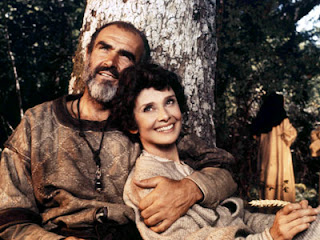
I go past the gooseberry bush, where only a few undersized fruits remain; most of them have been taken by the birds, or fallen unnoticed to the ground. There were always gooseberries when we were young, down at the end of the garden, next to the rhubarb plants, just past the metal pole at the end of the washing line. The pole was always slightly loose in its fittings, and on a windy day, you'd hear it clang as it moved backwards and forwards, swung around by the movement of the heavy wet washing. A few steps further there was an old green swing, with a deep channel under the wooden seat, where years and years of scuffing shoes had worn away the grass then the dirt. I remember how we used to dare each other to see if we could make the swing go so high it would spin right over the top. We never managed that, but we all learnt to leap from the seat at its highest point, stretching out to touch the top of the washing pole as we tried to fly. I remember the time my sister tore her red tartan dress when it caught on the swing as she leapt, I think I remember my mum's exasperated despair that she hadn't known better.
Perhaps we should get a swing for this garden, I like the idea of a future generation shouting at me to push 'higher, higher'. More than that though, I like the idea of sitting on it, gently moving backwards and forwards as the sun goes down, taking the time to reflect quietly on my day. I like to think that's what my Dad used to do as he sat on the old swing slowly inhaling one of the long Senior Service cigarettes he was discouraged from smoking indoors.
As I pass by the pond I try not to be distracted by the dusty windows of the shed, try not to notice the varnish that's cracked and peeling and the wooden slats that are drying out and warping in the sun. I don't even notice the empty raised beds; one day they'll be stocked with vegetables, just waiting for us to pick and eat, but not just yet.
When I reach the end, I go through the wooden gate. It hangs slightly askew and I need to lift it a bit to help the bolt slide out, but it's not too stiff or rusty and I remember to shut it behind me, in case the cat is following. I cross the access road; we're right at the end and there's no through route, so the cars don't come down this far. I like that it's there though, I like the way it marks the space between our proper garden and the secret garden that sits there in front of me.
At first glance all I can see are nettles and brambles, a mass of small flowers promising me an autumn blackberry harvest, but I know there's more to be found, that the thorns and stings are really there just to keep me out, like the forest that grew up around the sleeping beauty. There's a thin path along the side, where the grass has been cut, so I walk on, past the pile of grass trimmings and hedge cuttings, to the tangled branches of two old apple trees. One has small green apples, the clear sharp green of cooking apples; the colour of Robin Hood. The other tree has fruit of a softer green, with a pale red blush, a bit like Maid Marian.
Pushing through the apple trees are the new branches of an elder tree. I'm not sure if there's only one, the undergrowth is too tangled to see. I stand for a while, wishing I was a child again, imagining the fun I could have clearing a space and building my own secret den here, somewhere I could stay for hours with just a book and a glass of lemon barley water. I'd cut the thin branches and weave them into a shelter, peer through, without being seen. I could sit hidden from parents and sisters, staying safe from the evil Sheriff of Nottingham until my Robin cantered home.
Between the leaves I catch a glimpse of something red lying on its side, with brambles weaving up and through it. It's an old climbing frame. I recognise it immediately as the same one I bought for my sons many years ago. In an instant I'm taken back to the garden of the house we lived in when they were young. The house I thought would be ours for ever; the place they'd grow up in, leave and come back to with children of their own. I swallow hard, wondering where the years have gone, pushing back the voice that tauntingly reminds me how things didn't turn out quite the way I'd planned.
But then, just as the secret garden starts to fade away, turning back into just an overgrown wasteland, I hear another voice. It's Philip telling me about his plans for our orchard; the peaches, almonds, apricots, and greengages we'll grow, the walnut tree he's already ordered. Then I know, even if this doesn't turn out to be the place we live forever, we can still be like Robin Hood and Maid Marian.

Sunday, 17 April 2011
Garden-keeping
It will come as no surprise to those who know me, if I write that housekeeping is not my forte. It's not that I can't do it; I know all that could possibly ever need to be known about cleaning fluids and polish, dusters and mops. I have rubbed and scrubbed, vacuumed and swept with the best of them. I've experienced the self-righteous glow of turning a pigsty into a palace, but frankly it just doesn't interest me. I resent the time spent washing things down and tidying stuff up; I'd rather be doing almost anything else.
But while I can merrily ignore dust until I trip over it, and live with accumulated papers til they cut me, I simply cannot leave grass that has grown too long, or weeds that need pulling. All week long I've been getting itchier and twitchier as I've practically heard them growing in the garden, calling to me as they stretch their green arms out to the sun. This morning I responded to the call and spent a few lovely hours trimming and digging, and now, with achy fingers and dusty knees I can sit here with a genuine sense of satisfaction from a job done well, that was well worth the doing.
What is it about being outside that makes work feel like play?
When we were kids we spent a lot of time outside, while mum was indoors trying to make our house spotless. I sometimes joke that we were locked out in the garden so we couldn't come in and make a mess, but I'm not entirely sure that isn't true. When I think of my mother back then, she's almost always either cleaning or ironing. I'm probably the only person on the planet for whom the Beatles' album Rubber Soul is inextricably mixed with the sounds of my mum singing along to the backing track of a hissing steam iron.
In my mum's head, anything, and I do mean anything, that required washing, must also demand ironing - socks, pants, towels; nothing was already sufficiently flat that she wouldn't feel the need to bludgeon it into further submission. And given that there were five of us, that always meant a pretty huge ironing pile waiting to be tackled.
It seemed to have a hold on her, as though she couldn't relax until it was conquered for the day. Even on the most glorious sunny days, when you might have thought the heat of an iron was too much to bear, she'd still set up the ironing board. Her only concession would be to open the french windows, and set the board just outside, stretching the iron's lead as far into the garden as she could.
For two weeks of every year though, it was different. Each afternoon of the last week in June, and the first week in July, the housework would be abandoned, as mum sat down to watch Wimbledon. Glued to the TV she'd live through every moment of Roger Taylor's unsuccessful efforts to be the next Fred Perry. And those are my favourite memories of her. In my mind, a whole summer was mixed up in just those two weeks.
I'm sure that was when she'd let us make our own ice-lollies, pouring orange juice into special plastic holders; or when she'd give us a bowl of peas to pod, sitting on the back door-step in the sun. It might have been when we helped her pick gooseberries from the bottom of the garden, or loganberries from the bush behind the shed. I know it was then that she tried to teach us the rules of tennis, when I learnt that a tie at 40 points was called deuce and not juice.
Every now and then, if it really was a perfect summer's day, then mum would abandon the inside of the house and come to sit on a deck chair in the garden, to watch us play our own version of Wimbledon on the lumpy, but regularly-cut back lawn in Croxted Road. I'm sure that was the reason I ached so much to have my own tennis racket, and why I was oh so chuffed to get a perfect white Slazenger. I still have it; although nowadays it's warped beyond playable and the shiny white paint has almost all chipped off.
You can't see any more where I carefully scratched my name into the handle, claiming ownership, exhibiting such pride, but I think it's the only possession that has stayed with me since childhood. Maybe that, and the memories it brings with it is why, even now, at the slightest hint of warmth and sunshine, I feel the need to get out there to cut the grass.

But while I can merrily ignore dust until I trip over it, and live with accumulated papers til they cut me, I simply cannot leave grass that has grown too long, or weeds that need pulling. All week long I've been getting itchier and twitchier as I've practically heard them growing in the garden, calling to me as they stretch their green arms out to the sun. This morning I responded to the call and spent a few lovely hours trimming and digging, and now, with achy fingers and dusty knees I can sit here with a genuine sense of satisfaction from a job done well, that was well worth the doing.
What is it about being outside that makes work feel like play?
When we were kids we spent a lot of time outside, while mum was indoors trying to make our house spotless. I sometimes joke that we were locked out in the garden so we couldn't come in and make a mess, but I'm not entirely sure that isn't true. When I think of my mother back then, she's almost always either cleaning or ironing. I'm probably the only person on the planet for whom the Beatles' album Rubber Soul is inextricably mixed with the sounds of my mum singing along to the backing track of a hissing steam iron.
In my mum's head, anything, and I do mean anything, that required washing, must also demand ironing - socks, pants, towels; nothing was already sufficiently flat that she wouldn't feel the need to bludgeon it into further submission. And given that there were five of us, that always meant a pretty huge ironing pile waiting to be tackled.
It seemed to have a hold on her, as though she couldn't relax until it was conquered for the day. Even on the most glorious sunny days, when you might have thought the heat of an iron was too much to bear, she'd still set up the ironing board. Her only concession would be to open the french windows, and set the board just outside, stretching the iron's lead as far into the garden as she could.
For two weeks of every year though, it was different. Each afternoon of the last week in June, and the first week in July, the housework would be abandoned, as mum sat down to watch Wimbledon. Glued to the TV she'd live through every moment of Roger Taylor's unsuccessful efforts to be the next Fred Perry. And those are my favourite memories of her. In my mind, a whole summer was mixed up in just those two weeks.
I'm sure that was when she'd let us make our own ice-lollies, pouring orange juice into special plastic holders; or when she'd give us a bowl of peas to pod, sitting on the back door-step in the sun. It might have been when we helped her pick gooseberries from the bottom of the garden, or loganberries from the bush behind the shed. I know it was then that she tried to teach us the rules of tennis, when I learnt that a tie at 40 points was called deuce and not juice.
Every now and then, if it really was a perfect summer's day, then mum would abandon the inside of the house and come to sit on a deck chair in the garden, to watch us play our own version of Wimbledon on the lumpy, but regularly-cut back lawn in Croxted Road. I'm sure that was the reason I ached so much to have my own tennis racket, and why I was oh so chuffed to get a perfect white Slazenger. I still have it; although nowadays it's warped beyond playable and the shiny white paint has almost all chipped off.
You can't see any more where I carefully scratched my name into the handle, claiming ownership, exhibiting such pride, but I think it's the only possession that has stayed with me since childhood. Maybe that, and the memories it brings with it is why, even now, at the slightest hint of warmth and sunshine, I feel the need to get out there to cut the grass.

Monday, 11 April 2011
Cherish is the word I use to describe
It's not often that I spend an evening by myself. It's such a rarity that, when I imagine it, I build the idea up as a special treat, a chance to do what I like, an opportunity to pretend that I'm a grown-up independent woman, in charge of my own destiny and decisions.
I hadn't expected to be on my own tonight. It wasn't until Megan called, just as I was leaving work, that I knew both she and Philip had alternative plans. My day at work had been stupidly busy, so the previously unforeseen promise of a peaceful, solitary evening dangled alluringly in front of me all the way home. A bit like an air freshener on a rear view mirror.
The trouble with car deodorisers though is that the fresh new atmosphere they promise usually turns out to be a false unnatural scent, masking the reality. Even with my appalling sense of smell, I know that's not the right ambience for me.
It's a rare occasion that I come home to a dark and silent house. I'm usually the last one back, the one coming in to shoes parked by the front door, bags dropped somewhere between there and the kitchen, opened mail scattered across the dining table and the radio playing loudly in the background. Minor annoyances, that are easily cancelled out by a cheerful welcome, the offer of a nice cup of tea, and the sight of debris in the kitchen, promising me a lovely dinner already half cooked.
Tonight the only greeting was an insistent one from the cat, wondering why he'd had to wait so long to be fed. After I'd answered his demands and made myself a cuppa, I mooched around the kitchen, hoping for some inspiration on the food front. I've never seen the point of cooking just for me. I'd hoped to finish off last night's rhubarb crumble, but it seems someone had that for breakfast. Luckily there was some cold meat in the fridge, so a lamb sandwich dinner it was.
Half an hour home and I was already feeling a bit sorry for myself. I turned on the TV - not just for the sound of the voices; this was my night in charge, I could watch what I liked. Well, I could within reason. A quick flick through the channels showed me that the value of controlling the remote is in direct proportion to the quality of the programmes on offer.
I was just about to turn off in contempt, when a news-clip from years ago caught my attention. The footage panned across a scene at Heathrow airport where hundreds, perhaps thousands of screaming teenage girls waited to welcome the arrival from the United States of their heart throb David Cassidy. In an instant I was transported back to the early 1970s, to the first time I ever went to a concert, the first time I ever felt completely part of a whole experience, watching, listening, feeling, the beat of the music coming up through the floor, my screams joining the others echoing around Wembley Stadium.
Sitting here tonight, in our house in Shoreham, I could see myself back in my bedroom in Croxted Road; playing the Cherish album again and again; singing along to every word and holding onto the album cover as tightly as if it had been him. I loved David Cassidy then, really loved him, and like so many millions of girls the world over, I convinced myself that I only had to meet him to persuade him that he'd love me too. I started saving up. I wasn't yet old enough for a Saturday job, but my pocket money pennies and birthday gifts that year all went into a special box; it had a slit in the top and a label on the front - my 'going to America to marry David Cassidy' fund.

I can remember all that so well, but strangely I can't remember when I stopped poring over the pictures in Jackie magazine, when I discovered other albums to listen to, found another use for my pennies. I don't even know what happened to the going-to-America box. I suspect it happened gradually, as I slowly understood it wasn't a reality and there were other, better, things to spend my time thinking about, wishing and wanting.
Then it came to me, forty years later, sitting here in our house in Shoreham, that's exactly what will happen to my dreams of spending time alone - one day I'll just know that there are other, better, things to spend my time thinking about, wishing and wanting.
I hadn't expected to be on my own tonight. It wasn't until Megan called, just as I was leaving work, that I knew both she and Philip had alternative plans. My day at work had been stupidly busy, so the previously unforeseen promise of a peaceful, solitary evening dangled alluringly in front of me all the way home. A bit like an air freshener on a rear view mirror.
The trouble with car deodorisers though is that the fresh new atmosphere they promise usually turns out to be a false unnatural scent, masking the reality. Even with my appalling sense of smell, I know that's not the right ambience for me.
It's a rare occasion that I come home to a dark and silent house. I'm usually the last one back, the one coming in to shoes parked by the front door, bags dropped somewhere between there and the kitchen, opened mail scattered across the dining table and the radio playing loudly in the background. Minor annoyances, that are easily cancelled out by a cheerful welcome, the offer of a nice cup of tea, and the sight of debris in the kitchen, promising me a lovely dinner already half cooked.
Tonight the only greeting was an insistent one from the cat, wondering why he'd had to wait so long to be fed. After I'd answered his demands and made myself a cuppa, I mooched around the kitchen, hoping for some inspiration on the food front. I've never seen the point of cooking just for me. I'd hoped to finish off last night's rhubarb crumble, but it seems someone had that for breakfast. Luckily there was some cold meat in the fridge, so a lamb sandwich dinner it was.
Half an hour home and I was already feeling a bit sorry for myself. I turned on the TV - not just for the sound of the voices; this was my night in charge, I could watch what I liked. Well, I could within reason. A quick flick through the channels showed me that the value of controlling the remote is in direct proportion to the quality of the programmes on offer.
I was just about to turn off in contempt, when a news-clip from years ago caught my attention. The footage panned across a scene at Heathrow airport where hundreds, perhaps thousands of screaming teenage girls waited to welcome the arrival from the United States of their heart throb David Cassidy. In an instant I was transported back to the early 1970s, to the first time I ever went to a concert, the first time I ever felt completely part of a whole experience, watching, listening, feeling, the beat of the music coming up through the floor, my screams joining the others echoing around Wembley Stadium.
Sitting here tonight, in our house in Shoreham, I could see myself back in my bedroom in Croxted Road; playing the Cherish album again and again; singing along to every word and holding onto the album cover as tightly as if it had been him. I loved David Cassidy then, really loved him, and like so many millions of girls the world over, I convinced myself that I only had to meet him to persuade him that he'd love me too. I started saving up. I wasn't yet old enough for a Saturday job, but my pocket money pennies and birthday gifts that year all went into a special box; it had a slit in the top and a label on the front - my 'going to America to marry David Cassidy' fund.
I can remember all that so well, but strangely I can't remember when I stopped poring over the pictures in Jackie magazine, when I discovered other albums to listen to, found another use for my pennies. I don't even know what happened to the going-to-America box. I suspect it happened gradually, as I slowly understood it wasn't a reality and there were other, better, things to spend my time thinking about, wishing and wanting.
Then it came to me, forty years later, sitting here in our house in Shoreham, that's exactly what will happen to my dreams of spending time alone - one day I'll just know that there are other, better, things to spend my time thinking about, wishing and wanting.
Thursday, 31 March 2011
The power of a long thin envelope
I'm not sure exactly when it was, but I must have been about ten years old when I first discovered the power of a long thin envelope. Up until then, the only mail I'd been remotely interested in was the stiff square variety that turned up at Christmas and birthdays; cards containing at worst a gaudily coloured wish and at best a folded five pound note.
This envelope was different. It was cream and important looking, with a typed label on the front. Though I knew it was about me, it wasn't addressed to me, so all I could do was wait for my Dad to open it, wait for him to read it, then watch him pass it to my Mum to do the same. All I could do was watch while they looked at each other and wait until they finally looked at me.
----------------
Some months earlier there'd been discussions about secondary school. This was in the days when the Eleven Plus was still widespread, when children were categorised, classified and labelled on the basis of a three-part test. My big sister had already passed hers and was attending the local grammar school, but I wasn't daunted. I'd spent most of my life playing word games and doing puzzles; I knew the smug satisfaction of getting a sum right, demonstrating my comprehension skills, predicting the next shape or number in a series.I was one of those sickening kids who actually liked tests; I positively looked forward to it.
So that was when my parents upped the ante. I've no idea who first suggested I might sit for a scholarship to James Allen's Girls' School, a local independent fee-paying establishment. I don't remember if they asked me what I thought, but it wouldn't have mattered anyway, I couldn't have expressed a view; nobody I knew had ever gone there, or was ever likely to do so.
The scholarship exam was in three parts, two rounds of tests, and for those who did well enough, a final interview. My memory of the tests is hazy and mixed up with later experiences of exams, but I'm pretty sure we had to sit in a huge hall with tall windows. The first challenge was probably finding my seat - walking down the long rows to find an empty chair at one of the wooden fold-up tables, taking my seat while looking around at the other girls, watching them place their pencils neatly on the table-tops.
I must have done ok. I got through the first round of tests and then the second one. A few weeks later, before I'd even really thought about it, I was on my way to an interview.
Nowadays, if someone I knew was going to an interview I'd tell them to prepare, to think about the questions they might be asked, to imagine themselves in the role. Back then, the whole thing still bore no relation to reality. I don't think it even occurred to my parents, with their misplaced trust in my innate ability, that I might need some guidance or practice. It wasn't until the imposing lady with the stuck-up voice enquired haughtily of my entirely healthy, but distinctly adenoidal south London accent, "do you have a cold?" that I started to realise I might be out of my depth.
My nasally-toned answers to her questions became monosyllabic. After a while she waved a hand grandly towards a large gilt-framed picture propped up on a chair -"'talk to me about this painting Sharon. Describe to me what you see. Tell me what it makes you think of". At that point I think we both knew we were wasting our time.
--------------
I'd worked out that a letter of acceptance would come with lots of information about uniform and books, about kit-bags and fountain pens. And that would mean a thick, padded envelope.
So when the long thin envelope arrived, I already knew what it contained. In the time it took for my Dad to open it, read it, then pass it to my Mum to do the same; before they'd looked at each other and then at me; before I'd even started to feel guilty for disappointing their hopes, I'd already learned that the power of a long thin envelope is the power to dash down dreams you didn't even know you had.

This envelope was different. It was cream and important looking, with a typed label on the front. Though I knew it was about me, it wasn't addressed to me, so all I could do was wait for my Dad to open it, wait for him to read it, then watch him pass it to my Mum to do the same. All I could do was watch while they looked at each other and wait until they finally looked at me.
----------------
Some months earlier there'd been discussions about secondary school. This was in the days when the Eleven Plus was still widespread, when children were categorised, classified and labelled on the basis of a three-part test. My big sister had already passed hers and was attending the local grammar school, but I wasn't daunted. I'd spent most of my life playing word games and doing puzzles; I knew the smug satisfaction of getting a sum right, demonstrating my comprehension skills, predicting the next shape or number in a series.I was one of those sickening kids who actually liked tests; I positively looked forward to it.
So that was when my parents upped the ante. I've no idea who first suggested I might sit for a scholarship to James Allen's Girls' School, a local independent fee-paying establishment. I don't remember if they asked me what I thought, but it wouldn't have mattered anyway, I couldn't have expressed a view; nobody I knew had ever gone there, or was ever likely to do so.
The scholarship exam was in three parts, two rounds of tests, and for those who did well enough, a final interview. My memory of the tests is hazy and mixed up with later experiences of exams, but I'm pretty sure we had to sit in a huge hall with tall windows. The first challenge was probably finding my seat - walking down the long rows to find an empty chair at one of the wooden fold-up tables, taking my seat while looking around at the other girls, watching them place their pencils neatly on the table-tops.
I must have done ok. I got through the first round of tests and then the second one. A few weeks later, before I'd even really thought about it, I was on my way to an interview.
Nowadays, if someone I knew was going to an interview I'd tell them to prepare, to think about the questions they might be asked, to imagine themselves in the role. Back then, the whole thing still bore no relation to reality. I don't think it even occurred to my parents, with their misplaced trust in my innate ability, that I might need some guidance or practice. It wasn't until the imposing lady with the stuck-up voice enquired haughtily of my entirely healthy, but distinctly adenoidal south London accent, "do you have a cold?" that I started to realise I might be out of my depth.
My nasally-toned answers to her questions became monosyllabic. After a while she waved a hand grandly towards a large gilt-framed picture propped up on a chair -"'talk to me about this painting Sharon. Describe to me what you see. Tell me what it makes you think of". At that point I think we both knew we were wasting our time.
--------------
I'd worked out that a letter of acceptance would come with lots of information about uniform and books, about kit-bags and fountain pens. And that would mean a thick, padded envelope.
So when the long thin envelope arrived, I already knew what it contained. In the time it took for my Dad to open it, read it, then pass it to my Mum to do the same; before they'd looked at each other and then at me; before I'd even started to feel guilty for disappointing their hopes, I'd already learned that the power of a long thin envelope is the power to dash down dreams you didn't even know you had.

Thursday, 10 February 2011
The shed
A few nights ago I dreamed of our garden shed. It wasn't the timber-slatted, flower-pot-and-cobweb filled refuge of an aged pipe-smoker. Neither was it an eau-de-nil painted summerhouse, with gingham curtains and a wide verandah. This shed was brick-built and square with a flat roof; a utilitarian council-house issue of the early 1960s. It stood in the garden of our house in Croxted Road, just a few yards away from the kitchen, and for nearly twenty years it was the first thing I saw whenever I opened the back door.
For hour after hour when I was a girl, I'd play two-balls against the closed shed door, the pounding of the tennis balls on the wood, marking out time to one of the rhythmic songs I'd learned at school; each line accompanied by the appropriate actions as I practised throwing and catching, throwing and catching.
"PK penny a packet,
first you lick it, then you smack it,
then you stick it to your jacket
PK, penny a packet"
In my dream the door was open and I was peering into the gloom of the shed's interior. It was a bit like looking at any memory, clear at the centre, but dark and fuzzy the further you go into it.
In my mind, there was a coal bunker just inside. Though the house was newly built when we moved in and I don't remember there ever being a coal fire, I could swear there were a few shiny black nuggets in its corners. Did I imagine the square of old faded carpet laid out on the hard concrete floor under our feet, where we played 'shop' on rainy days when it was too wet to stay in the garden; where we'd pile up toys for sale and take it in turns to press down the keys of the brown and cream plastic till to ring up the prices.
I pictured a folded up wigwam leaning against the wall and the old Silver Cross pram, which we used mostly for pushing our dolls, but sometimes for carrying the docile ginger cat from two doors down, who didn't mind being dressed up. Behind it was a heavy black tricycle and somewhere in a corner there must have been the abandoned pogo stick that I tried so hard to master yet never managed to cling on to for more than two springs.
In the shed of my dream there was no sign of my sister's chopper bike and no images of us huddled on the doorstep each night after school, polishing our shoes before we could go indoors. Nothing had yet been cleared to make way for the stacked cages of the guinea pig stud farm, those small substitutes for the ponies my sister really wanted. And my selective memory edits out the times I took friends home to ridicule her as she spent hour after hour training guinea pigs to jump over tiny makeshift fences in her garden gymkhanas. My older sister tells me she locked me in the shed once until I wet my knickers, but that event is firmly erased from my consciousness.
Memory is a tricky thing; even more so when it's shaped by a dream, so it's hard to be sure how much of what I recalled is true. The shed always seemed dark, I don't think there was a light or any electricity and there was only one small window high up, but in my mind's eye hanging on the far wall, was a framed print of Van Gogh's Sunflowers, shining out like a gold tooth in a gaping mouth.

For hour after hour when I was a girl, I'd play two-balls against the closed shed door, the pounding of the tennis balls on the wood, marking out time to one of the rhythmic songs I'd learned at school; each line accompanied by the appropriate actions as I practised throwing and catching, throwing and catching.
"PK penny a packet,
first you lick it, then you smack it,
then you stick it to your jacket
PK, penny a packet"
In my dream the door was open and I was peering into the gloom of the shed's interior. It was a bit like looking at any memory, clear at the centre, but dark and fuzzy the further you go into it.
In my mind, there was a coal bunker just inside. Though the house was newly built when we moved in and I don't remember there ever being a coal fire, I could swear there were a few shiny black nuggets in its corners. Did I imagine the square of old faded carpet laid out on the hard concrete floor under our feet, where we played 'shop' on rainy days when it was too wet to stay in the garden; where we'd pile up toys for sale and take it in turns to press down the keys of the brown and cream plastic till to ring up the prices.
I pictured a folded up wigwam leaning against the wall and the old Silver Cross pram, which we used mostly for pushing our dolls, but sometimes for carrying the docile ginger cat from two doors down, who didn't mind being dressed up. Behind it was a heavy black tricycle and somewhere in a corner there must have been the abandoned pogo stick that I tried so hard to master yet never managed to cling on to for more than two springs.
In the shed of my dream there was no sign of my sister's chopper bike and no images of us huddled on the doorstep each night after school, polishing our shoes before we could go indoors. Nothing had yet been cleared to make way for the stacked cages of the guinea pig stud farm, those small substitutes for the ponies my sister really wanted. And my selective memory edits out the times I took friends home to ridicule her as she spent hour after hour training guinea pigs to jump over tiny makeshift fences in her garden gymkhanas. My older sister tells me she locked me in the shed once until I wet my knickers, but that event is firmly erased from my consciousness.
Memory is a tricky thing; even more so when it's shaped by a dream, so it's hard to be sure how much of what I recalled is true. The shed always seemed dark, I don't think there was a light or any electricity and there was only one small window high up, but in my mind's eye hanging on the far wall, was a framed print of Van Gogh's Sunflowers, shining out like a gold tooth in a gaping mouth.
Friday, 14 January 2011
A north-south divide
I'm a South London girl, through and through. Those of you reading this from other parts of the country, or indeed the world, might not realise the enormous difference between being just a Londoner and being a South Londoner. I know lots of countries have a north-south divide; with one half of a country deemed to be more prosperous, productive and progressive than the other. I know I've occasionally made an ever-so-slightly derogatory comment about my beloved's birthplace being in the north of England. But the truth is, in my heart, the north-south divide centers on the River Thames. All the good people live south of the river, the others, well they're just Londoners.
I'm fiercely proud of the few square miles where I grew up. Who needs London Zoo when you can feed the ducks in Dulwich Park? Who'd want a dip in the Serpentine when you might swim all day at Brockwell Park Lido. Why crane your neck to admire the Docklands skyscapers when you could gaze up at the Crystal Palace Tower and pretend you're in Paris?

None of my family still live in the area, so nowadays there's very little reason to go back. But once in a while, when I'm brave enough to take the car into London, I'll go slightly out of my way to follow the route of the no.3 bus, slowing down as I pass our old house in Croxted Road, and again when I hit the congestion of Brixton High Street. Then I'll remember the shopping trips to Brixton with my Mum, me traipsing around behind her while she did her shopping; bored, but comforted by the knowledge that we'd always end up going to Marks & Spencers for chicken-flavoured crisps and a packet of iced biscuits.
My first ever Saturday job was at Clark's the Bakers in Brixton's Electric Avenue. Wikipedia tells me now that the street gained its name from being the first in London to be lit by electricity. I didn't know that then, but I did know the different names for all the types of bread; from farmhouse to bloomer, split-tin to baguette. I remember the way our fingers got sticky from the cakes, then black-sticky from handling the money, and I know how horribly smug I was that I could add up the prices in my head while others needed to jot them down on the back of paper bags. I haven't thought about that job for years, but as I write this, I can still picture the brown and white checked overalls we had to wear; a bit like a doctor's housecoat, only nasty and nylon. I can still sense the feel of sticky fingers on synthetic fabric.
And when I think of working at Clark's I can't help but remember my first ever boyfriend. Eddie lived in Brixton, and on Saturdays he worked in Electric Avenue. I never minded tidying up the trays of belgian buns and doughnuts, when it meant I could look up to see the tall grinning Irish lad, selling yams and green bananas from the market stall outside. After work, it was so much nicer waiting outside Woolworths for the bus home, when you had someone warm to wait with.
Perhaps the relationship was doomed to last only as long as my job at the bakers, but it wasn't helped by events on the night my Mum threw a party, on a river-boat on the Thames. Copious amounts of free drink and the gentle rocking of the waves proved too much for Eddie and he ended up being sick over the side of the boat. It might perhaps have been ok, if I'd known before then about the false tooth he wore. The one right at the front. The one that flew out in a stream of vomit, into the river that night.
At the time I was mortified and even though the tooth was soon replaced, I could never look at him quite the same again. Many, many years later, with the benefit of hindsight and perhaps a slightly less shallow perspective, I can be much more forgiving. Who knows, maybe his nausea had nothing to do with the drink, perhaps it was the strange foreign air he was forced to breathe on leaving South London and entering that no-man's land of the Thames, the great north-south divide.
I'm fiercely proud of the few square miles where I grew up. Who needs London Zoo when you can feed the ducks in Dulwich Park? Who'd want a dip in the Serpentine when you might swim all day at Brockwell Park Lido. Why crane your neck to admire the Docklands skyscapers when you could gaze up at the Crystal Palace Tower and pretend you're in Paris?
None of my family still live in the area, so nowadays there's very little reason to go back. But once in a while, when I'm brave enough to take the car into London, I'll go slightly out of my way to follow the route of the no.3 bus, slowing down as I pass our old house in Croxted Road, and again when I hit the congestion of Brixton High Street. Then I'll remember the shopping trips to Brixton with my Mum, me traipsing around behind her while she did her shopping; bored, but comforted by the knowledge that we'd always end up going to Marks & Spencers for chicken-flavoured crisps and a packet of iced biscuits.
My first ever Saturday job was at Clark's the Bakers in Brixton's Electric Avenue. Wikipedia tells me now that the street gained its name from being the first in London to be lit by electricity. I didn't know that then, but I did know the different names for all the types of bread; from farmhouse to bloomer, split-tin to baguette. I remember the way our fingers got sticky from the cakes, then black-sticky from handling the money, and I know how horribly smug I was that I could add up the prices in my head while others needed to jot them down on the back of paper bags. I haven't thought about that job for years, but as I write this, I can still picture the brown and white checked overalls we had to wear; a bit like a doctor's housecoat, only nasty and nylon. I can still sense the feel of sticky fingers on synthetic fabric.
And when I think of working at Clark's I can't help but remember my first ever boyfriend. Eddie lived in Brixton, and on Saturdays he worked in Electric Avenue. I never minded tidying up the trays of belgian buns and doughnuts, when it meant I could look up to see the tall grinning Irish lad, selling yams and green bananas from the market stall outside. After work, it was so much nicer waiting outside Woolworths for the bus home, when you had someone warm to wait with.
Perhaps the relationship was doomed to last only as long as my job at the bakers, but it wasn't helped by events on the night my Mum threw a party, on a river-boat on the Thames. Copious amounts of free drink and the gentle rocking of the waves proved too much for Eddie and he ended up being sick over the side of the boat. It might perhaps have been ok, if I'd known before then about the false tooth he wore. The one right at the front. The one that flew out in a stream of vomit, into the river that night.
At the time I was mortified and even though the tooth was soon replaced, I could never look at him quite the same again. Many, many years later, with the benefit of hindsight and perhaps a slightly less shallow perspective, I can be much more forgiving. Who knows, maybe his nausea had nothing to do with the drink, perhaps it was the strange foreign air he was forced to breathe on leaving South London and entering that no-man's land of the Thames, the great north-south divide.
Sunday, 9 January 2011
The Black Crow
It was the rain that woke me up. The incessant drumbeat on the flat kitchen roof, the higher singing tone of water cascading over the blocked gutter. And now that I'm awake, it's the rain that keeps me up, watching its drops break against the window pane like a series of morse code dots and dashes.
There'll be sandbags across the doorways of the cottages by the river tonight. Bags to sop up the encroaching water, stop it coming across the doorstep; a lumpen wordless bodyguard for each house. I wonder how high the water is now. In the few years we've been here, I've seen it swell over into the fields across the river, reminding me of the Chinese rice fields we learnt about in school, but it's never been high enough to cross over to our side, or inch its way up our street. I imagine the water filling up all the cracks and holes left in the tarmac by the recent frosts and snow, forming puddles for wellie-clad children to jump in tomorrow.
We've been here long enough for me to know which of the roads gets tricky to pass after a heavy downpour, the big dip further along the valley, the road by the lake, where there's nowhere for the water to drain away. I'm never sure how to drive through standing water. I'm scared that if I drive slowly the water will seep into the engine, creep in around the door sills, suck me and the car into its clinging wetness. My urge is to accelerate, push through it as quickly as possible, no matter what great bow-wave I create. Then through the other side, where, if my car was a dog it would shake from side to side and nose to tail, creating a halo of raindrops. Instead I pull away fast, hoping the wheelspin will drive away the water.
When I was a child, my younger sister Caroline was scared of the rain, she always thought it would flood. And as kids so often do, we picked up on her terror. We could reduce her to tears, a flood of her own, by telling her that the house would float away each time it poured. I always liked the imagined idea of de-camping upstairs in a storm, piling up the furniture, eating picnics on our beds, but that probably didn't help for Caroline. Upstairs wasn't a place of refuge for her - not since the time our big sister Ros had so vividly imagined and described 'The Black Crow' that hovered at the top of the staircase waiting to pounce.
Perhaps it was just water that Caroline hated, you'd have certainly thought so if you ever heard her having her hair washed. When we were kids, there was no shower at home and it wasn't til I was a teenager that we got one of those rubber shower hoses that you can fit over the bath-taps. So for years, our mother washed our hair while we stood at the sink, using saucepans full of water. Pour, shampoo, rinse, then repeat. When it was Caroline's turn the sound of each saucepan-full was accompanied by the sound of screaming as she wriggled to escape, trying to duck the water, failing to keep the shampoo out of her eyes. Pour, scream, rinse, shriek, shampoo, sob, rinse, screech, then repeat... scream, scream, scream.
I can almost hear it now.
As I sit and listen in my head to those sounds from long ago, I realise that it's quieter here now. The deluge from the drain has stopped; the ticking of the mantelpiece clock has replaced the rain-beats on the roof. Time to go back up to bed.
I wonder where The Black Crow sleeps tonight.
There'll be sandbags across the doorways of the cottages by the river tonight. Bags to sop up the encroaching water, stop it coming across the doorstep; a lumpen wordless bodyguard for each house. I wonder how high the water is now. In the few years we've been here, I've seen it swell over into the fields across the river, reminding me of the Chinese rice fields we learnt about in school, but it's never been high enough to cross over to our side, or inch its way up our street. I imagine the water filling up all the cracks and holes left in the tarmac by the recent frosts and snow, forming puddles for wellie-clad children to jump in tomorrow.
We've been here long enough for me to know which of the roads gets tricky to pass after a heavy downpour, the big dip further along the valley, the road by the lake, where there's nowhere for the water to drain away. I'm never sure how to drive through standing water. I'm scared that if I drive slowly the water will seep into the engine, creep in around the door sills, suck me and the car into its clinging wetness. My urge is to accelerate, push through it as quickly as possible, no matter what great bow-wave I create. Then through the other side, where, if my car was a dog it would shake from side to side and nose to tail, creating a halo of raindrops. Instead I pull away fast, hoping the wheelspin will drive away the water.
When I was a child, my younger sister Caroline was scared of the rain, she always thought it would flood. And as kids so often do, we picked up on her terror. We could reduce her to tears, a flood of her own, by telling her that the house would float away each time it poured. I always liked the imagined idea of de-camping upstairs in a storm, piling up the furniture, eating picnics on our beds, but that probably didn't help for Caroline. Upstairs wasn't a place of refuge for her - not since the time our big sister Ros had so vividly imagined and described 'The Black Crow' that hovered at the top of the staircase waiting to pounce.
Perhaps it was just water that Caroline hated, you'd have certainly thought so if you ever heard her having her hair washed. When we were kids, there was no shower at home and it wasn't til I was a teenager that we got one of those rubber shower hoses that you can fit over the bath-taps. So for years, our mother washed our hair while we stood at the sink, using saucepans full of water. Pour, shampoo, rinse, then repeat. When it was Caroline's turn the sound of each saucepan-full was accompanied by the sound of screaming as she wriggled to escape, trying to duck the water, failing to keep the shampoo out of her eyes. Pour, scream, rinse, shriek, shampoo, sob, rinse, screech, then repeat... scream, scream, scream.
I can almost hear it now.
As I sit and listen in my head to those sounds from long ago, I realise that it's quieter here now. The deluge from the drain has stopped; the ticking of the mantelpiece clock has replaced the rain-beats on the roof. Time to go back up to bed.
I wonder where The Black Crow sleeps tonight.
Sunday, 19 December 2010
Saying the wrong thing
There's a certain irony to this post, given that writing a blog is all about choosing the right words, but I guess in real life we've all done it - said the wrong thing in the wrong way at the wrong time.
Sometimes it's just plain funny. Like the time when my Mother, sitting under the hazelnut tree in the garden, turned to my beloved and exclaimed loudly, "Oh Philip, what lovely nuts you've got"
But at other times it’s more complicated.
It was probably my twelfth birthday when my parents' gift to me was a hairdryer and some money. I've never really been a hairdryer person; I'm vain but lazy, so the effort of standing there for hours with aching arms to achieve a perfect hair-do was never my thing, but they meant well. And the money was brilliant - ten pounds was a lot in those days, I remember my friends at school being really envious and I was genuinely grateful for it at the time. Until... until my youngest sister's birthday six months, later when they bought her a Chopper bike.

Choppers were all the rage at the time. I'd never had my own bike, and never learned to ride one, I was horribly jealous.
I didn't stop to think about the reasons behind the gift, or the tight finances that might have stopped them buying me one when I was her age. To me it was proof that they didn't care enough to think about what I wanted and that they loved her more. Complete nonsense, but it rankled. It rankled so much that next time I lost my temper I shouted "Ten pounds and a hairdryer! That's how much you care about me!"
Cruel, horrible words. Since then I've tried to erase the embarrassment that came to me too late, by attempting to make a joke of it, encouraging people to laugh at my mean-spiritedness and over time, my generous family have let it become just that - a family joke.
As an adult I've haven't eliminated my ability to be insensitive or stupid, but I've learned to recognise the tell-tale signs - the raised eyebrow, the polite smile and embarrassed laugh, or the fleeting expression of pain that comes in response to a thoughtless remark. And that's a kindness because it gives me a chance to redeem the situation.
But it only works when you're face-to-face with people. The advent of e-mail brought with it a whole range of opportunities for misunderstandings from hastily sent missives. And since starting this blog, I've uncovered another potential bear-pit - the comments form.
I love to receive comments; at their best, they make me feel proud of what I've written, at their most useful they help me to see how I could write better. So it seems only fair, when I read other people's work, that I should say something in return. And that's where the trouble arises - because it does feel like 'saying' rather than writing. For me, that sometimes means I'll fall into the trap of trying to make myself sound clever, without really thinking through or understanding how it will be interpreted at the other end and I'll press the publish button just a little too soon.
A few days ago I left a comment on a blog I admire very much. When I went back to look at later comments I re-read what I'd said. I winced at the horrible combination of patronising and glib, at words which say more about my character faults than anything about the person they were written to. There's been no response, so I've no notion of how it was received. The simplest thing would be to go back and delete it, but that might also seem odd and spark another load of misunderstanding. So I'm writing this with that slightly sick feeling of knowing I said the wrong thing at the wrong time and not quite knowing what to do about it.
If you're reading this as the recipient of the comment, then I'm genuinely sorry. Given the chance, I will try and make a joke or a tradition of it. In the meantime, I shall just sit here and feel like my twelve-year-old self.
Saturday, 20 March 2010
Big book of proper - the dining room table
When I was young we ate almost all of our meals at the kitchen table. The dining room table was pushed back against the wall, out of the way, and only pulled out for us to sit round on special occasions.
So, why does the dining room table feature in my Big book of Proper?
When I think back and picture myself as a child I am almost always sitting at the table. I know I sat there for hour after hour in quiet concentration, finding all sorts of ways to keep busy.
Colouring in was a game that required careful planning - my concerns weren't about using the right colours, or keeping inside the lines - I knew that each part of the picture came alive as I coloured it in,so I had to colour it in the right order - if I did the feet first, the person would run away only half-filled in.
I always loved reading and had plenty of library books, but one of my favourite ever books actually belonged to my sister Caroline - it was called Caroline and her Friends. I desperately wanted my own copy, so one year I sat at the table for what seemed like the whole of the summer holidays, copying out the stories word for word into my own book.

A single jigsaw puzzle could present a number of challenges - sorting out the edge pieces first then filling in the middle; trying not to look at the picture on the lid, or attempting to do the sky first. My favourite ever jigsaw had a picture from the film of Chitty-Chitty Bang-Bang - Caractacus Potts and Truly Scrumptious dressed up as wind-up dancing dolls. I completed it so many times. Even now when I see the film, that scene takes me straight back to the dining table and the jigsaw.
So, no sign of dinner, and certainly nothing to do with etiquette, but the dining room table firmly belongs in the Big Book of Proper.
So, why does the dining room table feature in my Big book of Proper?
When I think back and picture myself as a child I am almost always sitting at the table. I know I sat there for hour after hour in quiet concentration, finding all sorts of ways to keep busy.
Colouring in was a game that required careful planning - my concerns weren't about using the right colours, or keeping inside the lines - I knew that each part of the picture came alive as I coloured it in,so I had to colour it in the right order - if I did the feet first, the person would run away only half-filled in.
I always loved reading and had plenty of library books, but one of my favourite ever books actually belonged to my sister Caroline - it was called Caroline and her Friends. I desperately wanted my own copy, so one year I sat at the table for what seemed like the whole of the summer holidays, copying out the stories word for word into my own book.

A single jigsaw puzzle could present a number of challenges - sorting out the edge pieces first then filling in the middle; trying not to look at the picture on the lid, or attempting to do the sky first. My favourite ever jigsaw had a picture from the film of Chitty-Chitty Bang-Bang - Caractacus Potts and Truly Scrumptious dressed up as wind-up dancing dolls. I completed it so many times. Even now when I see the film, that scene takes me straight back to the dining table and the jigsaw.
So, no sign of dinner, and certainly nothing to do with etiquette, but the dining room table firmly belongs in the Big Book of Proper.
Sunday, 7 March 2010
Life writing
Yesterday I took a trip into London for a day school on Life Writing. On my way there, I did some reminiscing about past journeys into the big city.
When I was young the no.3 bus wound its way from Crystal Palace to Camden Town past my front door.
 We lived in between two bus stops, so journeys always started with a brisk walk, half-run, down the road, constantly checking over our shoulders to see if the bus was coming. Shopping trips with Mum usually meant sitting downstairs with the other mums and the old people. But journeys into London only ever happened with my Dad, and that was an entirely different adventure.
We'd jump on the bus, swinging around the yellow pole, and climb the stairs to take our seats in the smoke-filled arena of silent working men and chatting teenagers. If we were lucky we'd get to sit in the front seats, so we could pretend to be driving the bus ourselves.
At first all we could see was houses - bigger and grander than ours - but still just houses. Then, as we got to the bottom of Croxted Road it started to get more exciting. Past Brockwell Park, where years later I'd spend the hottest, sunniest summer of my life swimming and tanning at the Lido. On to Brixton where we'd crane our necks to see the green banana stalls in Electric Avenue, then Kennington, where I knew there was a cricket ground because Dad always watched the 40-over games on TV on a Sunday. We knew we were nearly in London when we came to the Imperial War Museum, its two huge guns a silent warning to wayward children.
Dad would point out the buildings and streets he knew, so we'd always end up singing 'Doing the Lambeth Walk - Oi!' as we neared Lambeth Bridge. Then it was over the river and into London proper - past the houses of Parliament and up into Whitehall. In those days there were no black gates and railings blocking off Downing Street, but there were still those two silent horseguards sitting motionless outside Whitehall Palace, impervious to the taunts and teasing of tourists posing for photos. Ahead of us, we'd see Nelson's column rising up out of Trafalgar Square, surrounded by people and pigeons in equal measures.
Sometimes we'd stay on the bus, through Piccadilly, up Regent Street, to the magical world of Hamleys toy shop. But an even better treat was to get off at Trafalgar Square to feed the birds.

It's strange for me now to think what a thrill that was - nowadays the thought of a pigeon perching on my head would send me running for the hills. But one thing has remained the same - I still think sitting in the upstairs front seats of a no.3 bus is the best way to arrive in London.
Oh - and in case you're wondering - it turns out Life Writing has nothing at all to do with writing stories of naked people...........
When I was young the no.3 bus wound its way from Crystal Palace to Camden Town past my front door.

We'd jump on the bus, swinging around the yellow pole, and climb the stairs to take our seats in the smoke-filled arena of silent working men and chatting teenagers. If we were lucky we'd get to sit in the front seats, so we could pretend to be driving the bus ourselves.
At first all we could see was houses - bigger and grander than ours - but still just houses. Then, as we got to the bottom of Croxted Road it started to get more exciting. Past Brockwell Park, where years later I'd spend the hottest, sunniest summer of my life swimming and tanning at the Lido. On to Brixton where we'd crane our necks to see the green banana stalls in Electric Avenue, then Kennington, where I knew there was a cricket ground because Dad always watched the 40-over games on TV on a Sunday. We knew we were nearly in London when we came to the Imperial War Museum, its two huge guns a silent warning to wayward children.
Dad would point out the buildings and streets he knew, so we'd always end up singing 'Doing the Lambeth Walk - Oi!' as we neared Lambeth Bridge. Then it was over the river and into London proper - past the houses of Parliament and up into Whitehall. In those days there were no black gates and railings blocking off Downing Street, but there were still those two silent horseguards sitting motionless outside Whitehall Palace, impervious to the taunts and teasing of tourists posing for photos. Ahead of us, we'd see Nelson's column rising up out of Trafalgar Square, surrounded by people and pigeons in equal measures.
Sometimes we'd stay on the bus, through Piccadilly, up Regent Street, to the magical world of Hamleys toy shop. But an even better treat was to get off at Trafalgar Square to feed the birds.

It's strange for me now to think what a thrill that was - nowadays the thought of a pigeon perching on my head would send me running for the hills. But one thing has remained the same - I still think sitting in the upstairs front seats of a no.3 bus is the best way to arrive in London.
Oh - and in case you're wondering - it turns out Life Writing has nothing at all to do with writing stories of naked people...........
Subscribe to:
Posts (Atom)