I'm not sure exactly when they arrived. One day the sides of the motorway were just plain banks of grass, the next, there was a swathe cut through and a tarmac path running parallel to the road. Suddenly there were three caravans, parked nose to tail on the concrete, traffic cones marking their space like a red and white picket fence.
There are net curtains at the windows; a strange suggestion of homeliness, and once or twice I've seen a man emerge blinking into the early morning sunshine as I pass by on my way to work. He wears the violent lime-green overalls of a construction worker and I wonder if he is actually living at the side of the road. The transition from my quiet home to the hectic madness of the motorway is always a shock to me; I can't imagine what it must be like to have no transition at all, to spend your working days and sleeping nights on the side of the road. This is one of the busiest motorways in the country, there is no end to the roaring traffic, and as the lorries thunder past rocking the fragile trailers, I think it must be like living in a constantly churning tumble dryer.
I wonder what the workers do once they've finished for the day. I picture a thick-set man in his late forties, ducking his head to step through the small doorway. He takes off the hard-hat he's been wearing all day and tries to rub away the lines it has left on his forehead. Then he eases off the heavy boots and places them together just inside the door. I see him trying to wash the grime of the road off his hands at a small stainless steel sink, before heating a tin of beans on a tiny two-ring stove. What does he do for the rest of the evening? Perhaps he's slumped back against the geometric-patterned fabric of a thin bench, peering at a portable TV; he must be frustrated at the quality of the picture, the poor reception caused by the constant traffic. Does he sit at the small table playing game after game of solitaire,or quietly reading until his eyes get heavy and he realises he's almost asleep and missing half the words? I smile at the thought that one night he might order himself a take-away; at the image of the bewildered pizza-boy, trying to find the right lay-by.
The roadworks are scheduled to last until the summer of 2012; twelve months of contra-flow systems and traffic cones; a whole year of speed limits that the crawling traffic has no chance of breaking, and speed cameras that threaten us should we dare. As summer turns to autumn, winter, then spring, I'll pass through this way on my journey to work each day and back again in the evening. I've no doubt I'll complain when the traffic is bad, swear when I get held up. I won't enjoy the journey, but I will be grateful that, unlike the imagined residents of the roadside caravans, I am just passing through.
Friday, 29 July 2011

Tuesday, 26 July 2011
Staying over
It's sometimes blindingly obvious - that link between childhood fascinations and grown-up obsessions. It takes no effort at all for me to trace the journey from standing with my Dad, on the terraces at Crystal Palace football club, to standing with Philip behind the goal at Bromley FC. It's almost as easy to see how my my love for Formula 1 racing started when we walked beside the wide tracks of the one-time racing circuit in Crystal Palace Park, or listened to the roar of the engines from the back door step at home.
It isn't always quite as simple to understand the impact of the things we never did, those things that went unnoticed and unremarked at the time.
Looking back I think we must have been fairly self-contained as a family; the characters in my memory bank are always my parents, grandparents and sisters. Apart from an occasional aunt and uncle, I don't remember any other visitors. Perhaps there were friends of my parents who made quiet calls after I'd gone to bed, but if they did, there were never any traces of their presence the next day. And, apart from the time when my Nan was really sick, I never, ever, remember anyone coming to stay.
No childish sleepover ending in a top-to-toe bed-share; no late night dinner party leading to a blanket- draped figure on the sofa. No strange coats thrown over the banisters at the bottom of the stairs, no odd toothbrushes in the bathroom, no politely embarrassed conversations over breakfast.
Our house wasn't big; five of us and only three bedrooms, but it never felt too small to me, certainly not like Maria from school, who lived with her six brothers and sisters in one of those tiny houses overlooking the cemetery. We didn’t have central heating, but hardly anyone I knew did then –we were used to the winter frost on the inside of the bedroom windows, to cowering under the wall heater in the bathroom, to sitting in the kitchen with all the gas rings blazing to keep us warm while we ate. But the house was always clean; properly clean. not just a tidy-away-the-newspapers-and flick-the-hoover-round clean.
I never asked then, and I wouldn’t dream of asking now, so I'll never really know why nobody came to stay. But in the midst of all that didn't happen, I somehow missed out on a whole heap of life lessons, on the etiquette of staying over.
I never quite grasped how much cleaning in advance is a good thing or when to stop; I could never see the boundaries between thoughtful hospitality and force-feeding. I never learnt when it was ok to admit to tiredness, to suggest it was time for bed; and I never understood the proper arrangements for getting up in the morning or agreeing the order for the bathroom. I couldn't work out if it was better to take in a cup of tea and risk waking people too early, or to wait until they decided to surface and risk leaving them feeling ignored. I never reached that state of relaxed happiness where you know your guests are having a grand time and you can stop trying to fend off their boredom and disappointment.
For years I shied away from inviting people to stay; in my head I invented all sorts of reasons why it was a bad idea or simply inconvenient.
This weekend I learned something I never found out as a child; if you invite good people because you enjoy their company, you end up enjoying their company. Your new house begins to feel a bit more like home and you start to see the place where you live with different eyes. You might even begin to feel a strange sense of pride that your village has the only listed duck pond in the country and the largest scale model of the solar system in the world. It might not even matter if you don’t quite get the etiquette right, you could still have a simply lovely time.
And this weekend we did.
And this weekend we did.
Monday, 11 July 2011
Lazy Sunday afternoon
Leicester Square on a Sunday afternoon is all the very worst of London.
Crowds of people mill around, with no obvious sense of purpose or direction; tourists spill noisily from over-priced chain restaurants; the scents of sweat and grease mingle as their bodies and burgers are warmed in the sunshine.
Dark blue hoardings section off half the square, proudly proclaiming "we're getting ready for 2012". Here in 2011, people negotiate their own version of an Olympic steeplechase round the half-completed road works. As you pause outside the Odeon, imagining a red carpet rolled out across the upended paving slabs, you wonder what the Hollywood stars would make of this shabby London première; ball-gowns and high-heels mixed with JCBs and potholes.
Tucked between the restaurants and bars are the small shops, stacked high with souvenirs; in one, there are enough t-shirts to bestow an artless slogan on everyone in the square; in another a sea of red plastic - miniature London buses, telephone boxes, Royal Mail post-boxes. Do people ever really buy these as gifts for their loved ones, or is the whole world caught up in a game of "bring me back the worst thing…"?
In one corner of the square there’s a side street where tall buildings block out the sunshine; their shade acts as a deterrent to the crowds and it's suddenly quiet. At the far end there's an old-fashioned pub; the unwelcoming threat of its dark black exterior is mellowed by the gold lettering of the name picked out above the windows and a long cold drink is suddenly the thing you need most.
Stopping just inside the door, you take a moment to adjust to the gloom. There's a long bar on the left, and you're surprised to see how many people are standing against it; a part of you still thinks that Sunday afternoons are for sleeping off a roast dinner in front of the TV. At the far end there’s a seating area where padded leather benches line the oak-panelled walls. Red-shaded wall-lights are reflected in the wood, their glow a testament to centuries of polishing. Hanging between them, the glaring faces of lords and politicians send out their own gilt-framed messages of history and you begin to understand why this place is called The Imperial.
The leather benches are the colour of dried blood, and just for a moment, when you see the jumble of music cables spilling out over them, you think of entrails, but then you notice the guitar case that sits bolt upright and alone, quietly claiming the space, politely waiting its turn. You know that it's waiting for the singer to give it a voice, to introduce it to the crowd. So you find a wooden chair and wait.
The afternoon wears on and an ever-changing stream of tourists, Londoners, drinkers, singers and listeners passes through the bar. You watch them come and go, see them stop for a drink and stay a while for the music. You notice how tense they seem when they come through the doors and how quickly they relax. You begin to realise the value of this place, so steeped in history but welcoming the new; happy to accept both young and old, strange and known.
And then you know, that this small place just yards from Leicester Square, is all the very best of London.
Thursday, 30 June 2011
After five o'clock
They arrive in a group just after five o’clock. If I walk through the lift lobby around that time, I see them gathered together, chatting away in a language I don’t recognise, though I guess it’s from somewhere towards the east of Europe.
They’re a mixed bunch; men and women, a range of ages, but they look pleased to see each other as they come together. It’s the end of my day, the start of theirs and I wonder what they’ve been doing since they went their separate ways last night. Maybe it's just having the same job and a shared language that brings them together, or perhaps there's something more; remembered histories, whispered secrets, common experiences or family ties.
I’m not very good at leaving work; there’s always just one more e-mail I could deal with, a paper to read for a meeting the next day, a new policy document I really ought to get my head round. So I’m still at my desk when there’s a quiet knock and he pops his head round the door.
“ahh sorry” he says with a heavy accent, backing away quickly but grinning widely.
“Oh, I’m still working” I respond. Never quite sure how strong his English is, I gesticulate clumsily, waving an arm vaguely in the direction of the papers piled up on my desk, the bright computer screen blinking in the corner.
“I’m really sorry” I add, “I’ll be done soon”.
But he’s gone: off to hoover the corridor outside. I hear him whistling over the hum of the vacuum.
I don’t know how to explain that I really am sorry. I know he’s got a job to do, that I’m getting in the way of him doing it, delaying the time when he can finish and go home. I don’t know where he lives, I’ve never asked him, but I imagine a small flat at the top of a converted Victorian house that’s seen better days. I picture him walking slowly up the steps to the front door, trying to open it quietly so he doesn’t wake the children. I wonder if he complains to his wife about the stupid English lady who makes his work take longer. Or perhaps he shakes his head pityingly as he tells a tale of the sad woman who sits at her desk long after the others have gone home.
I carry on for a bit, trying to make some sense of my inbox in the vain hope that it will give me a better start the next day, but I’m tired, so it’s not long till I start to pack up. As I leave the office I look around for him, hoping to catch him and tell him the office is clear, I don’t want to leave him hanging around any longer than he has to or guessing when it’s safe to knock on the door again.
As I get to the stairs, he walks out of the kitchen.
“Good night” I call out, falsely cheerful, knowing I’ve still got a long drive ahead.
“Gooood night”. He says in return. And then, slowly, articulating each word with the utmost care, he adds
“I hope you have a nice evening”
And I go down the stairs smiling.
Sunday, 26 June 2011
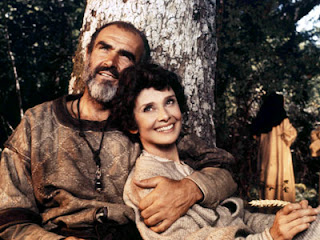
Like Robin Hood and Maid Marian
There's a sunken pathway. Without any paving stones the ground has compacted over the years, trodden down by the footsteps of all the others who've followed the same route to the end of the garden. I stop to admire the pale pink roses, wondering if I should collect the secateurs from the shed to cut some flowers for the house on the way back; already half-knowing I'll forget. I bury my nose in the soft petals, hoping just once to inhale their scent. My sense of smell faded long ago, but the fragrance of childhood rises in my memory at the thought of the crushed rose petals in a jam-jar of water that was my first perfume.
I go past the gooseberry bush, where only a few undersized fruits remain; most of them have been taken by the birds, or fallen unnoticed to the ground. There were always gooseberries when we were young, down at the end of the garden, next to the rhubarb plants, just past the metal pole at the end of the washing line. The pole was always slightly loose in its fittings, and on a windy day, you'd hear it clang as it moved backwards and forwards, swung around by the movement of the heavy wet washing. A few steps further there was an old green swing, with a deep channel under the wooden seat, where years and years of scuffing shoes had worn away the grass then the dirt. I remember how we used to dare each other to see if we could make the swing go so high it would spin right over the top. We never managed that, but we all learnt to leap from the seat at its highest point, stretching out to touch the top of the washing pole as we tried to fly. I remember the time my sister tore her red tartan dress when it caught on the swing as she leapt, I think I remember my mum's exasperated despair that she hadn't known better.
Perhaps we should get a swing for this garden, I like the idea of a future generation shouting at me to push 'higher, higher'. More than that though, I like the idea of sitting on it, gently moving backwards and forwards as the sun goes down, taking the time to reflect quietly on my day. I like to think that's what my Dad used to do as he sat on the old swing slowly inhaling one of the long Senior Service cigarettes he was discouraged from smoking indoors.
As I pass by the pond I try not to be distracted by the dusty windows of the shed, try not to notice the varnish that's cracked and peeling and the wooden slats that are drying out and warping in the sun. I don't even notice the empty raised beds; one day they'll be stocked with vegetables, just waiting for us to pick and eat, but not just yet.
When I reach the end, I go through the wooden gate. It hangs slightly askew and I need to lift it a bit to help the bolt slide out, but it's not too stiff or rusty and I remember to shut it behind me, in case the cat is following. I cross the access road; we're right at the end and there's no through route, so the cars don't come down this far. I like that it's there though, I like the way it marks the space between our proper garden and the secret garden that sits there in front of me.
At first glance all I can see are nettles and brambles, a mass of small flowers promising me an autumn blackberry harvest, but I know there's more to be found, that the thorns and stings are really there just to keep me out, like the forest that grew up around the sleeping beauty. There's a thin path along the side, where the grass has been cut, so I walk on, past the pile of grass trimmings and hedge cuttings, to the tangled branches of two old apple trees. One has small green apples, the clear sharp green of cooking apples; the colour of Robin Hood. The other tree has fruit of a softer green, with a pale red blush, a bit like Maid Marian.
Pushing through the apple trees are the new branches of an elder tree. I'm not sure if there's only one, the undergrowth is too tangled to see. I stand for a while, wishing I was a child again, imagining the fun I could have clearing a space and building my own secret den here, somewhere I could stay for hours with just a book and a glass of lemon barley water. I'd cut the thin branches and weave them into a shelter, peer through, without being seen. I could sit hidden from parents and sisters, staying safe from the evil Sheriff of Nottingham until my Robin cantered home.
Between the leaves I catch a glimpse of something red lying on its side, with brambles weaving up and through it. It's an old climbing frame. I recognise it immediately as the same one I bought for my sons many years ago. In an instant I'm taken back to the garden of the house we lived in when they were young. The house I thought would be ours for ever; the place they'd grow up in, leave and come back to with children of their own. I swallow hard, wondering where the years have gone, pushing back the voice that tauntingly reminds me how things didn't turn out quite the way I'd planned.
But then, just as the secret garden starts to fade away, turning back into just an overgrown wasteland, I hear another voice. It's Philip telling me about his plans for our orchard; the peaches, almonds, apricots, and greengages we'll grow, the walnut tree he's already ordered. Then I know, even if this doesn't turn out to be the place we live forever, we can still be like Robin Hood and Maid Marian.
I go past the gooseberry bush, where only a few undersized fruits remain; most of them have been taken by the birds, or fallen unnoticed to the ground. There were always gooseberries when we were young, down at the end of the garden, next to the rhubarb plants, just past the metal pole at the end of the washing line. The pole was always slightly loose in its fittings, and on a windy day, you'd hear it clang as it moved backwards and forwards, swung around by the movement of the heavy wet washing. A few steps further there was an old green swing, with a deep channel under the wooden seat, where years and years of scuffing shoes had worn away the grass then the dirt. I remember how we used to dare each other to see if we could make the swing go so high it would spin right over the top. We never managed that, but we all learnt to leap from the seat at its highest point, stretching out to touch the top of the washing pole as we tried to fly. I remember the time my sister tore her red tartan dress when it caught on the swing as she leapt, I think I remember my mum's exasperated despair that she hadn't known better.
Perhaps we should get a swing for this garden, I like the idea of a future generation shouting at me to push 'higher, higher'. More than that though, I like the idea of sitting on it, gently moving backwards and forwards as the sun goes down, taking the time to reflect quietly on my day. I like to think that's what my Dad used to do as he sat on the old swing slowly inhaling one of the long Senior Service cigarettes he was discouraged from smoking indoors.
As I pass by the pond I try not to be distracted by the dusty windows of the shed, try not to notice the varnish that's cracked and peeling and the wooden slats that are drying out and warping in the sun. I don't even notice the empty raised beds; one day they'll be stocked with vegetables, just waiting for us to pick and eat, but not just yet.
When I reach the end, I go through the wooden gate. It hangs slightly askew and I need to lift it a bit to help the bolt slide out, but it's not too stiff or rusty and I remember to shut it behind me, in case the cat is following. I cross the access road; we're right at the end and there's no through route, so the cars don't come down this far. I like that it's there though, I like the way it marks the space between our proper garden and the secret garden that sits there in front of me.
At first glance all I can see are nettles and brambles, a mass of small flowers promising me an autumn blackberry harvest, but I know there's more to be found, that the thorns and stings are really there just to keep me out, like the forest that grew up around the sleeping beauty. There's a thin path along the side, where the grass has been cut, so I walk on, past the pile of grass trimmings and hedge cuttings, to the tangled branches of two old apple trees. One has small green apples, the clear sharp green of cooking apples; the colour of Robin Hood. The other tree has fruit of a softer green, with a pale red blush, a bit like Maid Marian.
Pushing through the apple trees are the new branches of an elder tree. I'm not sure if there's only one, the undergrowth is too tangled to see. I stand for a while, wishing I was a child again, imagining the fun I could have clearing a space and building my own secret den here, somewhere I could stay for hours with just a book and a glass of lemon barley water. I'd cut the thin branches and weave them into a shelter, peer through, without being seen. I could sit hidden from parents and sisters, staying safe from the evil Sheriff of Nottingham until my Robin cantered home.
Between the leaves I catch a glimpse of something red lying on its side, with brambles weaving up and through it. It's an old climbing frame. I recognise it immediately as the same one I bought for my sons many years ago. In an instant I'm taken back to the garden of the house we lived in when they were young. The house I thought would be ours for ever; the place they'd grow up in, leave and come back to with children of their own. I swallow hard, wondering where the years have gone, pushing back the voice that tauntingly reminds me how things didn't turn out quite the way I'd planned.
But then, just as the secret garden starts to fade away, turning back into just an overgrown wasteland, I hear another voice. It's Philip telling me about his plans for our orchard; the peaches, almonds, apricots, and greengages we'll grow, the walnut tree he's already ordered. Then I know, even if this doesn't turn out to be the place we live forever, we can still be like Robin Hood and Maid Marian.

Sunday, 19 June 2011
Step by step
He walks...
seeking out new footpaths, different routes, unknown views; making a landmark of a tree silhouetted against the wide clear sky; seeing patterns in the clouds gathering along the valley.
He takes pleasure in a mock orange hanging over a tributary of the river; stopping to inhale the perfume, burying his face in the blossom;
He visits local pubs, greeting landlords with cheery enthusiasm, trying out the local beers.
He stands silently at the gates of Broughton Manor; where Offa of Mercia battled with the King of Kent, and Edmund Ironside defeated the Danish invaders.
I can't sit still...
picking odd things up, trying them in a new position; opening the last of the boxes;
cleaning surfaces, wiping and dusting like the good housewife I've never been and will never be for long.
I re-order books; taking one at a time from the bookcase, trying it next to a new neighbour on a different shelf.
I stand at the kitchen sink; gazing into the long garden, watching the light at different times of day, listening to the birds in the tall trees next door.
I cut the grass, walking slowly up and down, my feet marking out our new territory, my footprints on our ground.
I plant a rose; figuratively and literally putting down roots.
We're slowly settling in.
Tuesday, 14 June 2011
A sense of place
It's been a long time since I put finger to keyboard. There's been a lot going on; a new house, a holiday; a whole series of new experiences, sights and impressions.
It still feels too early to write about the house. We're settling in, and getting to know it. It's lovely, but I haven't yet got past the sense that we're playing at living here; Otford still feels more like somewhere we're visiting than the place where we live.
So while I can't yet write about the place I've come to, I'll try to share a few impressions of where I've just been - from my recent holiday to the beautiful Ionian island of Kefalonia.
------------
Gradakia beach
The sea, just about warm enough to swim in, brings shrieks and squeals of shock from timid bathers. We start the week like the others, inching in slowly, feeling the chill creep up our legs and higher, until we are almost breathless with the cold, gasping and swearing quietly. After a day or two we decide it's better to immerse ourselves quickly, get the shock over, move around frantically until we acclimatize. We like to describe it as 'marching in bravely.'
-------------
Two women stand in the shallows, playing bat and ball. They take turns to start, but each fails dismally to return the ball; they never quite manage to create the rhythmical pit-pat of a rally. One suddenly rushes for the shore "I forgot I'd gone in with me watch on!" she cries, holding the offending time-piece between finger and thumb. It dangles and drips uselessly.
Their husbands have opted to try snorkelling. They sport matching blue face-masks with bright orange breathing tubes; the garish colours a testament to the newness of the equipment so recently purchased from the Dolphin supermarket in Lassi. Heads down, they kick towards the rocks at the edge of the bay, in search of strange creatures.
Above them a bare-footed, brown-skinned, boy looks down. The men have no idea they have interrupted his solitary game of dare-and-dive, the game for which he scrambles on sun-hardened feet over jagged rocks. They'll never know how hard he has to fight to overcome the fear of jumping, the terror of scraping skin on sharp edges, of landing in too-shallow water to gashed hands or feet, of the bite of a strange bright-coloured creature.
---------------
A sun-bed by the water's edge. Waking from sleep, disorientated, a line of dribble at the side of her mouth confirms her slip from consciousness. She sits up too quickly, not knowing how long she's lain there in the sun, already feeling the skin on her back beginning to tighten. A single hair, caught in the hinge of her sunglasses, tickles and irritates. She looks at others sitting around her, catches the smirking glances of one or two before they turn away.
In the row behind her a family sit together; father, mother and frowning teenage boy, two sun loungers beneath an umbrella, one beach mat on the sand beside. She wonders what bargain has been struck for the father and son to secure the beds, what compromise or promise has been extracted to relegate the mother to the floor.
----------------
A father and daughter come to the beach. He is laden down with toys to keep her amused, beach ball, bucket and spade, a range of small plastic figures.
There is no mistaking their relationship, each has a shock of curly black hair and dark eyes, both have large front teeth sticking out over their lower lips as though constantly in thought. Each is very overweight, with rounded belly, thick legs, pudgy arms.
The girl decides to apply her own suncream, while her father stands at the water's edge, looking on. The factor is high, the lotion the thick consistency of tile-grout; she smears it in streaks on arms and legs, missing the parts she cannot reach. Her father continues to watch her efforts, his expression a mix of indulgence and despair. I wonder if he is encouraging her self-sufficiency or simply avoiding having to help her. Others watch silently; though nothing is said, I think we are all struck with the urge to help. But friends who've spent a week rubbing lotion into each other's backs unquestioningly, know they cannot do the same for her.
Our shared exasperation is expressed by one on-looker, once father and daughter have finally made their way into the sea. "I really hate it when people let their children get fat." Until then, I don't think I'd realised quite how snugly indulgence sits, between caring too much and too little.
It still feels too early to write about the house. We're settling in, and getting to know it. It's lovely, but I haven't yet got past the sense that we're playing at living here; Otford still feels more like somewhere we're visiting than the place where we live.
So while I can't yet write about the place I've come to, I'll try to share a few impressions of where I've just been - from my recent holiday to the beautiful Ionian island of Kefalonia.
------------
Gradakia beach
The sea, just about warm enough to swim in, brings shrieks and squeals of shock from timid bathers. We start the week like the others, inching in slowly, feeling the chill creep up our legs and higher, until we are almost breathless with the cold, gasping and swearing quietly. After a day or two we decide it's better to immerse ourselves quickly, get the shock over, move around frantically until we acclimatize. We like to describe it as 'marching in bravely.'
-------------
Two women stand in the shallows, playing bat and ball. They take turns to start, but each fails dismally to return the ball; they never quite manage to create the rhythmical pit-pat of a rally. One suddenly rushes for the shore "I forgot I'd gone in with me watch on!" she cries, holding the offending time-piece between finger and thumb. It dangles and drips uselessly.
Their husbands have opted to try snorkelling. They sport matching blue face-masks with bright orange breathing tubes; the garish colours a testament to the newness of the equipment so recently purchased from the Dolphin supermarket in Lassi. Heads down, they kick towards the rocks at the edge of the bay, in search of strange creatures.
Above them a bare-footed, brown-skinned, boy looks down. The men have no idea they have interrupted his solitary game of dare-and-dive, the game for which he scrambles on sun-hardened feet over jagged rocks. They'll never know how hard he has to fight to overcome the fear of jumping, the terror of scraping skin on sharp edges, of landing in too-shallow water to gashed hands or feet, of the bite of a strange bright-coloured creature.
---------------
A sun-bed by the water's edge. Waking from sleep, disorientated, a line of dribble at the side of her mouth confirms her slip from consciousness. She sits up too quickly, not knowing how long she's lain there in the sun, already feeling the skin on her back beginning to tighten. A single hair, caught in the hinge of her sunglasses, tickles and irritates. She looks at others sitting around her, catches the smirking glances of one or two before they turn away.
In the row behind her a family sit together; father, mother and frowning teenage boy, two sun loungers beneath an umbrella, one beach mat on the sand beside. She wonders what bargain has been struck for the father and son to secure the beds, what compromise or promise has been extracted to relegate the mother to the floor.
----------------
A father and daughter come to the beach. He is laden down with toys to keep her amused, beach ball, bucket and spade, a range of small plastic figures.
There is no mistaking their relationship, each has a shock of curly black hair and dark eyes, both have large front teeth sticking out over their lower lips as though constantly in thought. Each is very overweight, with rounded belly, thick legs, pudgy arms.
The girl decides to apply her own suncream, while her father stands at the water's edge, looking on. The factor is high, the lotion the thick consistency of tile-grout; she smears it in streaks on arms and legs, missing the parts she cannot reach. Her father continues to watch her efforts, his expression a mix of indulgence and despair. I wonder if he is encouraging her self-sufficiency or simply avoiding having to help her. Others watch silently; though nothing is said, I think we are all struck with the urge to help. But friends who've spent a week rubbing lotion into each other's backs unquestioningly, know they cannot do the same for her.
Our shared exasperation is expressed by one on-looker, once father and daughter have finally made their way into the sea. "I really hate it when people let their children get fat." Until then, I don't think I'd realised quite how snugly indulgence sits, between caring too much and too little.
Subscribe to:
Posts (Atom)